
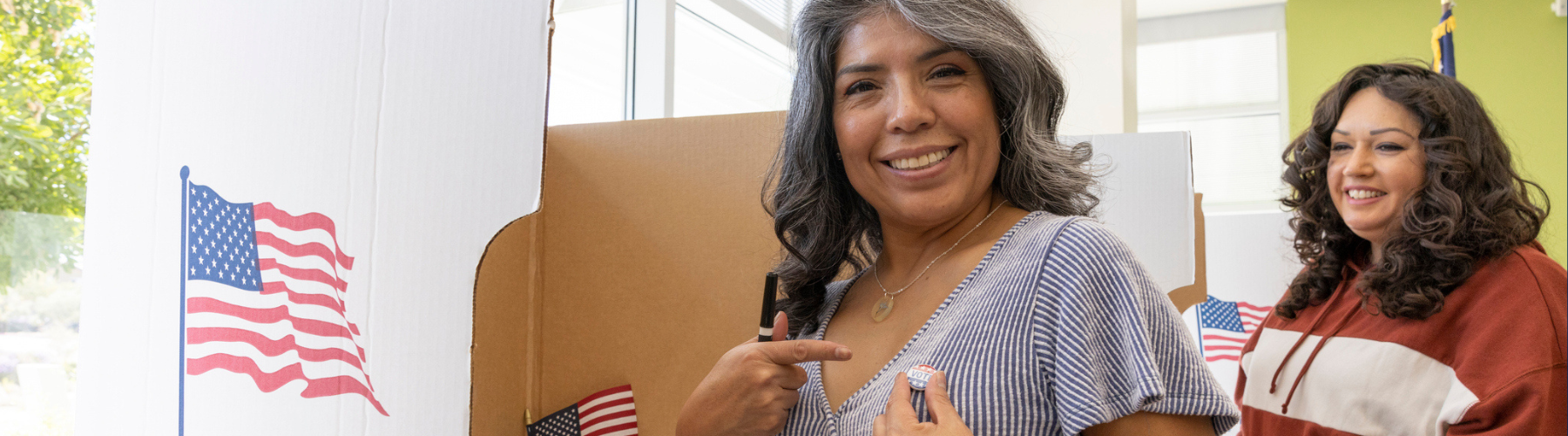
Latino communities across the U.S. vary immensely, and as we’ve touched on before, effective political outreach requires a granular understanding of these audiences. To dig deeper, we spoke with Amanda Hernandez, a senior account executive on Optimum Media’s Politics & Public Affairs team, to explore how Optimum Media reaches audiences across the media landscape to help our clients speak to important voters where they are.
Q: It’s well known among campaigns that Latino voters aren’t a monolith. How does Optimum Media view the diversity within Latino communities?
It’s important to understand the nuances of the varied Latino communities and how voter attitudes can shift based on country of origin, generational status, age, religion, and more. Even the importance of Latino identity can vary across generational lines. Among second-generation Latinos, 57% found their identity very important, compared with 71% of Latino immigrants.
As a first-generation American with parents from two different Latino countries, I’ve seen firsthand how three people in the same family can interpret the same message and prioritize different policy issues. While issues like immigration, the economy, and healthcare resonate across Latino communities, outreach is most effective when it’s local, specific, and delivered through trusted platforms.
Q: How does Optimum Media build audience segments across its offerings to reach those varied Latino segments effectively?
We layer traditional demographics like age, geography, and gender with behavioral and contextual indicators to create finely tuned segments. Language dominance is, of course, a core targeting component; for example, English-dominant, Spanish-dominant, and mixed-language households.
The fun, and honestly the real opportunity, comes in when we look at behavior data across these segments to show things like program/sports affinities, multigenerational homes, device usage, and local zip code-level issues. This is so important because finding the audience and targeting isn’t enough. The goal is to reach people authentically in the environments they care about, whether that’s music, sports, news, or channels connected to their culture, and tailor messaging to the issues that matter to them.
Simply targeting Telemundo or Bad Bunny content is too obvious, and treating immigration policy as if it’s the same for everyone isn’t enough, so it’s vital to find trusted partners and the right consultants to create and implement an authentic messaging strategy.
Q: That’s an excellent point about these segments not being super obvious. When those basic English/Spanish language slices aren’t enough, how do you create custom audiences to reach across demos?
Obviously, this is really important since we’ve shown these audiences are quite varied and complex. To reach specific groups more effectively, we combine first- and third-party data with program and app-level data to build custom cohorts. For example, bilingual millennials in gateway cities, older immigrant households that primarily consume Spanish-language traditional TV, or younger soccer fans who stream on mobile devices. This lets us target creative and placements to cultural and behavioral nuances rather than broad language buckets.
Q: To explore the language piece a little more, why is it important to avoid literal translations and account for regional dialects or accents, for example, Texas vs. Miami vs. New York, when communicating with Latino audiences?
Literal translations often miss cultural references, slang, tone, and context that vary by region, age, and background. As a marketer, it’s very obvious when a creative comes my way, and it’s a literal translation or the pronunciation or accent is off. Audiences will feel the same way. If a candidate can’t take the time to understand how to communicate with their constituents in a way that feels authentic, it’s hard to trust the message.
By using language that reflects regional vocabulary, idioms, and norms, a candidate can help a message feel authentic and understandable, show you’ve done your research, and improve engagement.
Those details aren’t always obvious — testing creative with custom target segments or using audience insights, for example, program preferences, age, and language, is a great way to show which phrasing and dialects resonate best.
Q: Research shows that younger Latinos tend to skew towards streaming. What mix do you recommend across OTT, mobile, and linear to reach bilingual and U.S.-born Latinos?
For bilingual and U.S.-born Latinos, especially younger audiences, the mix should be CTV-focused with limited linear placements tied to key live events. Interestingly, our internal data shows that this segment averages nearly 170 streaming hours per month and only about 12–15 linear hours. That means Hispanic households spend 10–14 times as much time streaming as watching traditional TV.
It would be wise, then, to use OTT for long-form and contextual placements within Spanish-language and Latino-friendly content, while reserving linear TV for high-reach moments tied to broad persuasion or GOTV pushes.
Mobile is a key component in mobilizing voters during GOTV. I love recommending our AdMessenger product, which delivers a 5x more engaging tap-to-action experience than traditional banner ads, making it a powerful tool for reaching key audiences during those all-important final campaign days.
Q: As mentioned, sports are a great way to reach many Latino audiences, especially at scale. Which sports and placements perform well, and are there unexpected opportunities Optimum Media has found?
Sports are one of the things that bring families together, and we all know how important family is within Latino communities. Some of my favorite childhood memories are of watching baseball games with my grandpa.
Sports can also be a source of national pride. The connection is obvious with events like the FIFA World Cup, but it also extends to American sports. My dad never had a favorite MLB team; he only had favorite players, and they were all Dominican.
Sports have always been a constant in my family. While baseball gave me a way to connect with older generations, the agony of being a Jets fan and the excitement of seeing the Knicks finally win a championship(!) are what my brother and I connect over.
In terms of where budget should go, it’s not surprising that soccer and baseball lead with many Latino audiences. Latino audiences 18+ are 58x more likely to watch international soccer. But the NFL has a broad cross-demographic reach and is useful for those wide-reach persuasion moments.
We also know the average fan, similar to my family, watches multiple sports, so expanding your sports mix with niche or regional sports not only deepens engagement but also creates opportunities to align with different phases of the election cycle around key sports moments. For example, Latino adults 18+ are 10x more likely to watch MMA than other audiences, and could be an efficient and cost-effective way to build impressions and incremental reach.
Q: How do you allocate budget and timing between Spanish-language vs. English-language outreach, and what platforms deliver the best ROI in nontraditional Latino DMAs?
At Optimum Media, we generally start with a campaign’s first-party list and cross-reference it with our own data to understand scale and trends to form an appropriate media strategy across budgeting and audience/language decisions. We’ve found it’s best to time pushes around specific, local moments and keep steady outreach between bursts. Campaigns can’t afford to ignore the Latino vote. After shifting toward Trump in 2024, Latino support for the GOP has waned, with 1 in 4 Latinos who voted for Trump in the last election saying they regret their vote, being driven largely by concerns over immigration and the economy.
This presents a real opportunity for both parties, but winning over hearts and minds will take tailored creative, smart audience segmentation, and messages shaped by the local issues people actually care about. That local first-party data should guide both messaging and budgeting, so campaigns spend where they’ll have the most impact and also have the flexibility to switch focus if needed. Optimum Media’s real-time audience insights and dedicated team help support campaigns in those pivotal moments when they need to make quick decisions on where to allocate — ultimately helping campaigns reach the right audience with the right message, where they are most engaged.
Want to move from assumptions to targeted, testable outreach? Connect with experts from the Optimum Media Politics & Public Affairs team, like Amanda, to build a plan that reaches the right voters in the right places.
Amanda Hernandez is a member of Optimum Media’s Politics & Public Affairs team, where she partners with campaigns and organizations to reach key audiences through strategic, data-driven media solutions. With more than 10 years of media experience, she has supported Latino-focused initiatives across political, retail, and CPG, developing a deep understanding of Latino media consumption and audience engagement. As a member of the Latino community, Amanda brings both professional expertise and personal perspective to her work.